Do's and Dont's
Landslide Preparedness and Prevention
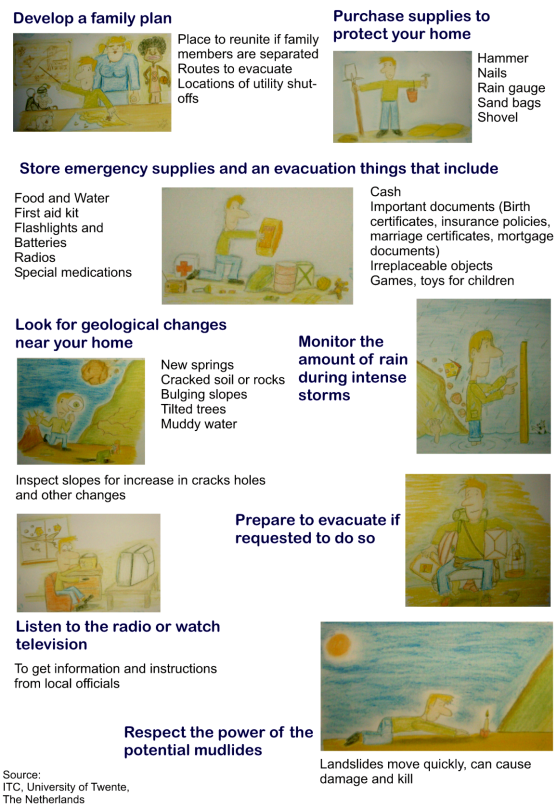
Do's and Dont's About Landslide

Areas Prone to Landslides
Old and/or recent existing
landslides
Base or top of slopes
Base of minor drainage hollows
Base or top of an old fill slope
Base or top of a steep cut slope
Areas generally safe from landslides
Hard, non-jointed bedrock that has
not moved in the
past
Flat-lying areas away from slopes
and steep river
banks
The nose of ridges, set back from
the tops of slopes
Landslide Warning Signs
Sticking or jamming of doors or windows
Appearance of cracks in plaster, tile,
brick, or
foundations
Pulling away from the building of outside
walls or
stairs
Slow development of widening cracks on the
ground or on
paved areas such as streets
Breakage of underground utility lines
Appearance of bulging ground at the base of
a slope
Emergence of flowing ground water in new
sites
Sudden decrease in creek water levels though
rain is
still falling or just recently stopped
Tilting or moving of fences, retaining
walls, utility
poles, or trees
Faint rumbling sound that increases in
volume as the
landslide nears signaling imminent danger
Immediate Steps for Imminent Landslide
Contact your local Fire, Police or
Public Works
Department
Inform affected neighbors
Leave the area quickly
Actions to be Taken before Intense Rainfall
Become familiar with the land around
you. Slopes, where
landslides or debris flows have occurred in the past, are likely to
experience them in the
future
Buildings should be located away
from known landslides,
debris flows, steep slopes, streams and rivers, intermittent
stream channels, and the mouths of
mountain channels
Observe the patterns of storm-water
drainage on slopes
near your home, and watch especially the places were runoff water converges,
increasing flow
over soil-covered slopes. Observe the hillsides around your home for any
signs of land movement,
such as small landslides or debris flows or progressively tilting trees
Contact your local authorities to
learn about the
disaster management response, and develop your own emergency plans for your
family and business
Monitor weather forecasts and
warnings issued by meteorological agencies to stay informed about the
intensity and duration of expected rainfall, allowing you to prepare and
take necessary precautions in advance.
During Intense Rainfall
Be observant. Many landslide and
debris flow casualties
occur when people are sleeping. Listen to radio for warnings of intense
rainfall. Intense short
bursts of rain may be particularly dangerous, especially after longer
periods of heavy rainfall
and damp weather
Unusual sounds might indicate moving
debris, such as
trees cracking or boulders knocking together. A trickle of flowing or
falling mud or debris may
precede larger landslides. Be alert for any sudden increase or decrease in
water flow in streams
or channels that may indicate landslide activity, so be
prepared to move
quickly
If you live in areas susceptible to
landslides and
debris flows, consider leaving if it is safe to do so. If you remain at
home, move to a part of
the house farthest away from the source of the landslide or debris flows,
such as an upper
floor, but keep an escape route open should it become necessary to leave the
house
Be alert when on the roads.
Embankments along roadsides
are particularly susceptible to landslides. Watch the road for collapsed
pavement, mud, fallen
rocks, and other indications of possible landslides or debris flows
After Intense Rainfall
Be alert for signs indicating land
movement. Landslides
can occur weeks or months after intense storms
Things to Remember
Mudflows tend to flow in channels,
but will often spread
out over a floodplain. They generally occur in places where they have
occurred before
Landslides and mudflows usually
strike without much
appreciable warning. The force of rocks, soil, or other debris moving down a
slope can devastate
anything in its path. Take the following steps to be ready
Plant ground cover on slopes and
build retaining
walls
In mudflow areas, build channels or
deflection walls to
direct the flow around buildings
Remember: If you build walls to
divert debris flow and
the flow lands on a neighbor's property, you may be liable for damages
Precautions to be Taken during Landslidess
If inside a building:
Stay inside
Take cover under a desk, table, or
other piece of sturdy
furniture
If outdoors:
Try and get out of the path of the
landslide or
mudflow
Run to the nearest high ground in a
direction away from
the path.
If rocks and other debris are
approaching, run for the
nearest shelter such as a group of trees or a building
If escape is not possible, curl into
a tight ball and
protect your head
After Landslide
Stay away from the slide area. There
may be
danger of
additional slides
Check for injured and trapped
persons near
the slide
area. Give first aid if trained
Remember to help your neighbors who
may
require special
assistance-infants, elderly people, and people with disabilities
Listen to a radio or television for
the
latest emergency
information
Stay away from the slide area. There
may be
danger of
additional slides
Check for damaged utility lines.
Report any
damage to
the utility company
Check the building foundation,
chimney, and
surrounding
land for damage
Replant damaged ground as soon as
possible
since erosion
caused by loss of ground cover can lead to flash flooding